
IYARINA
Napo-Pastaza, Ecuador
CENTER FOR LEARNING ALLIANCE: Fundación Cotococha | Andes and Amazon Field School | Shayarina Amazonian Resilience

In beginning times plants like animals were human and still retain these qualities hidden in leafy form. They are thus no less animate, no less closely related to us than say a spider monkey might be. One reason that we don't notice this is that their sleep cycle is opposite our own. Trees and other plants sleep during the day and come awake at night when we are dreaming. It is for this reason that they appear active and humanlike in dreams. For example, when sick person ingests medicinal bark it triggers a healing relation to the tree that only becomes visible at night. That night, when the tree wakes up, it comes to the patient in a dream as a human doctor come to treat her ailment.

Allyan Pasu

Chunda

Manduru

Kwica Panga
Plants Finder

Yana muyu wallis
Pseudolmedia laevis
Moraceae

Ichilla yaku wachansi
Mabea klugii
Euphorbiaceae

Chorisia integrifolia
Malvaceae

Alchornea triplinervia
Euphorbiaceae

Coffea arabica
Rubiaceae
Dimerocostus strobilaceus
Costaceae

Shikshi Lalu
Dieffenbachia harlingii
Araceae

Casearia ovalifolia
Salicaceae

Poecilanthe effusa
Fabaceae
Picramnia spruceana
Picramniaceae
Alchornea brevistyla
Euphorbiaceae

Piper poporense
Piperaceae

Ocotea sp.
Lauraceae

Piper sp.
Piperaceae
Auricularia fuscosuccinea
Auriculariaceae
Ichilla sacha maria panga
Piper sp.
Piperaceae

Virola sp.
Myristicaceae

Phyllantus niruri
Phyllanthaceae

Sanchezia skutchii
Acanthaceae
Conceveiba guianensis
Euphorbiaceae

Phytelephas tenuicaulis
Arecaceae

Manduru kasha ruya
Sterculia apetala
Malvaceae

Zamia amazonum
Zamiaceae
Andira inermis
Fabaceae
Virola Multicostata
Myristicaceae

Coffea robusta
Rubiaceae

Chondrodendron tomentosum
Menispermaceae

Siparuna guianensis
Siparunaceae

Alchornea glandulosa
Euphorbiaceae

Drymonia sp.
Gesneriaceae

Dicranostyles ampla
Convolvulaceae
Mikania sp.
Asteraceae

Sanchezia speciosa
Acanthaceae

Bactris amoena
Arecaceae

Paullinia serhanoides
Sapindaceae

Chunda angu
Diplopterys cabrerana
Malpighiaceae

Rollinia mucosa
Annonaceae

Piper udisilvestre
Piperaceae

Piper conejoense
Piperaceae

Palicourea sp.
Rubiaceae

Xylosma tessmannii
Salicaceae

Uchu yanda ruya
Zamia ulei
Zamiaceae

Pamba tukuta
Guarea carinata
Meliaceae
Calyptranthes plicata
Myrtaceae

Rayu pakay
Inga coruscans
Fabaceae

Kunambu
Attalea butyracea
Arecaceae

Ormosia arborea
Fabaceae
Pukuna kara kaspi
Xylopia parviflora
Annonaceae

Piper phytolaccifolium
Piperaceae

Tectaria sp.
Tectariaceae

Justicia sp
Acanthaceae

Commelina erecta
Commelinaceae

Inga sp.
Fabaceae

Kanua angu
Lonchocarpus seorsus
Fabaceae

Payanchi
Abuta rufescens
Menispermaceae
Serjania grandiflora
Sapindaceae
Dalechampia sp.
Euphorbiaceae
Guadua angustifolia
Poaceae

Ucsha
Geonoma stricta
Arecaceae
Cissampelos sp.
Menispermaceae

Gliugliu pakai
Inga bourgonii
Fabaceae

Cestrum macrophyllum
Solanaceae

Justicia sp.
Acanthaceae
Ipomoea sp.
Convolvulaceae

Killu payas
Miconia aulocalyx
Melastomataceae

Pearcea hypocyrtiflora
Gesneriaceae
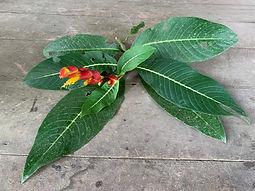
Sanchezia peruviana
Acanthaceae
Cecropia peltata
Urticaceae

Coussapoa trinervia
Urticaceae

Turu ilu
Heliconia schumanniana
Heliconiaceae